!The Scientific Mediator: Technology as a Bridge Between People and Knowledge Cover
**Published:** March 16, 2025
Climate change. Technological ethics. Healthcare access. Educational inequality.
None of these are purely technical problems. They're all sitting at the intersection of what we know and how we communicate, collaborate, and make decisions based on that knowledge.
That intersection is exactly where I found my purpose.
My MARCO profile identified it as the "Scientific Mediator." Analytical problem-solving combined with a cooperative, helpful nature. Comparable to Gandhi's approach of leading through mediation rather than confrontation.
In a world drowning in information and starving for understanding, this role matters more than ever. Technology, when designed with intention, can bridge the gap between people and knowledge, between different ways of knowing, between diverse communities seeking common ground.
But the same technology can also deepen every divide it's supposed to close. When it's misused. When it's designed without care.
My MARCO assessment identified several qualities that define this profile.
**Analytical problem-solving.** A natural pull toward understanding problems through logic and systematic approaches. Theoretical questioning. Data analysis. Working through complexity step by step.
**Cooperative spirit.** Teamwork over competition. Helping others solve complex problems collaboratively. The satisfaction comes from shared understanding, not winning arguments.
**Perceptive understanding.** Seeing patterns in complex systems. Approaching conflict with empathy first. Understanding before judging.
**Teaching orientation.** Working best in roles where explaining complex ideas and helping others navigate them is central.
This resonates with everything I've done. From hospitality management to cybersecurity to educational technology, I've consistently been drawn to roles that involve understanding complex systems and then making them accessible to others. The technical problem-solving is satisfying. But making those solutions meaningful to people? That's where the real satisfaction lives.
As information abundance grows and technical complexity increases, the gap between specialized knowledge and public understanding widens. Social media algorithms prioritize engagement over understanding. Our collective capacity for evidence-based dialogue deteriorates. Scientific Mediators bridge these divides. Translating specialized knowledge into accessible insight. Facilitating the human connections necessary for collective action.
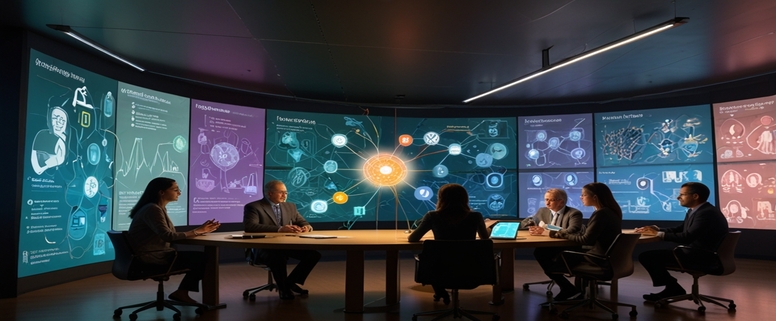
The Scientific Mediator approach focuses on three critical gaps in our current information landscape.
**The expertise divide.** The gap between what specialists know and what the public can access. Experts struggle to communicate accessibly. Non-experts struggle to evaluate competing claims. Everyone loses.
**The attention divide.** Deep, focused engagement versus fragmented, surface-level consumption. Most digital environments optimize for the latter. That's a problem.
**The perspective divide.** Increasingly segregated information environments separate people with different viewpoints. Shared understanding becomes harder. Collaborative problem-solving becomes nearly impossible.
Technology widens or narrows these divides depending on how it's built. Social media algorithms that prioritize engagement amplify simplified, emotionally charged content over genuine understanding. Search engines that over-personalize create filter bubbles that reinforce what you already believe.
But technology can also be designed to do the opposite.
**Knowledge translation tools.** Systems that translate specialist knowledge into accessible formats without sacrificing accuracy. Interactive visualizations. AI-assisted explanation that adapts to your background.
**Attention-enhancing tech.** Tools that support deep focus rather than destroying it. Reading environments designed for concentration. Notification management that protects your attention instead of fragmenting it.
**Perspective-bridging platforms.** Environments that help people understand different viewpoints rather than just argue from fixed positions. Finding common ground. Identifying shared values beneath surface disagreements.
Building MathSage and the "Learning is Fun" platform, I focused on exactly this. Making complex subjects accessible without dumbing them down. Supporting sustained attention for diverse cognitive styles. Connecting different perspectives on learning and knowledge.
The most powerful mediation tools don't just transfer information. They connect knowledge in ways that create new understanding.
**Cross-domain integration.** Tools that reveal relationships between seemingly separate fields. Insight from one area informing challenges in another. Interdisciplinary thinking made practical.
**Theory-to-practice bridging.** Simulation environments where theoretical principles play out in practical contexts. Implementation guidance that translates general principles into specific actions.
**Individual-to-collective bridging.** Systems that transform individual insights into shared understanding and back again. Collaborative knowledge bases. Group sense-making tools.
**Past-to-future linking.** Technologies that connect historical patterns with future possibilities without falling into simplistic extrapolation.
The Scientific Mediator approach keeps people at the center. Their needs, capabilities, and values drive the design. Technology isn't an autonomous solution. It's a tool for enhancing human connection with knowledge and with each other.
In practice this means educational platforms that adapt not just to individual learning styles but to the relationships between knowledge domains relevant to your goals. Collaboration systems that help teams see how their diverse expertise connects to the problem they're actually trying to solve.
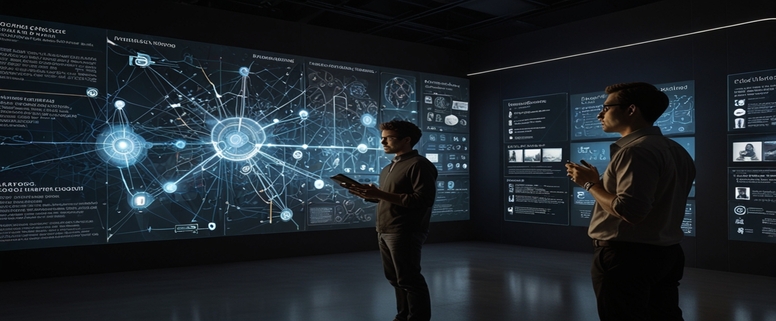
At the core of Scientific Mediation is how people actually interact with knowledge. Not just UI design. The deeper question of how we form meaningful relationships with information.
**Cognitive appropriateness.** Match how human cognition actually processes information. Support different cognitive styles. Respect the limits of working memory and attention.
**Progressive disclosure.** Structure information so complexity reveals itself at the right pace. Zoom in for detail. Zoom out for context. Let the user control the depth.
**Active engagement.** Support questioning, connecting, and applying knowledge. Not passive consumption. Active processing.
**Meaningful context.** Present information within frameworks that show significance, relationships, and implications. Not isolated facts floating in a void.
**Feedback loops.** Help users refine understanding and correct misconceptions without creating frustration.
Working with neurodivergent learners made these principles even more concrete for me. Different cognitive styles require different interfaces. Some learners need visual, spatial representations. Others need sequential structure. Some thrive with hands-on exploration. Others need quiet reflection.
Effective mediation accommodates this diversity instead of imposing one model on everyone. And here's what's interesting: designing for cognitive diversity often reveals new insights by enabling different ways of engaging with the same knowledge.
We don't have an information problem. We have a wisdom problem.
Information is everywhere. Discernment, context, and judgment about how to use it? Those are scarce.
Technology can support the transformation from information to wisdom.
**Knowledge hierarchies.** Organizing information from raw data to structured knowledge to applicable wisdom. Helping people understand not just facts but their significance.
**Truth evaluation.** Supporting critical assessment of information quality, reliability, methodology, and bias without requiring specialist expertise in every domain.
**Value integration.** Connecting information with relevant ethical considerations. Not just what's technically possible but what's wise to do.
**Consequence exploration.** Modeling potential outcomes of applying knowledge in different ways. Making implications visible before decisions are made.
The common thread: wisdom isn't something technology provides. It's something technology helps people develop through their own discernment.
Building MathSage, I found that the most valuable educational systems don't deliver answers. They guide conceptual understanding. There's a massive difference between giving someone a solution (which short-circuits learning) and helping them build genuine knowledge. That distinction sits at the heart of Scientific Mediation.
The Scientific Mediator approach is ultimately about using technology to enable cooperation and knowledge sharing rather than competition and hoarding.
This operates at three levels.
**Individual.** Tools that help people develop both technical understanding and communication skills for effective knowledge sharing. Not just organizing knowledge but translating it, explaining it, communicating it with empathy.
**Group.** Platforms that support collaborative knowledge building within teams and communities. Making diverse knowledge visible. Integrating different perspectives. Collective sense-making rather than opinion aggregation.
**Societal.** Infrastructure that enables broad knowledge sharing across disciplines, organizations, and geographies. Open repositories. Translation systems bridging specialized vocabularies. Governance models balancing openness with quality.
Practical implementation looks like knowledge commons that combine rigorous expert input with accessible explanation. Collaborative tools designed for integrating understanding rather than debating positions. Bridge-building roles connecting different knowledge communities. Inclusive design that accommodates diverse cognitive styles and access needs.
The framework doesn't impose a single model of cooperation. It creates conditions where diverse collaboration can emerge based on context and need.
In a world increasingly divided by information bubbles, specialized silos, and polarized discourse, the Scientific Mediator orientation offers something we desperately need.
Technology reimagined as bridge-building. Between people and knowledge. Between different ways of knowing. Between diverse communities seeking shared understanding.
I've found my deepest satisfaction not in technical mastery alone but in making complex knowledge accessible and meaningful to others. Whether in education, cybersecurity, or anything else, the moments when understanding actually bridges the gap, when someone goes from confused to clear? That's the purpose.
The technologies we create reflect our values. By designing from a Scientific Mediator perspective, we build tools that amplify understanding, collaboration, and wise action.
We don't just create better technology. We create better relationships between people and knowledge. And ultimately, between people themselves.
The future belongs not to those who accumulate the most information or the most powerful technologies. It belongs to those who can build the strongest bridges between what we know and what we need.
> "The future belongs not to those who accumulate the most information or the most powerful technologies, but to those who can build the strongest bridges between technical understanding and human needs."