!Seeding a Compassionate Future: Technology with Empathy at its Core Cover
**Published:** March 16, 2025
That's not just a farming principle. It's the law governing everything we build.
The systems we design today? They're seeds. Every algorithm, every interface, every architectural decision grows into something. If we seed fear, competition, and exploitation, we harvest division and diminished human dignity. If we seed empathy and understanding, we harvest technology that makes us more human, not less.
I've watched this play out working at the intersection of technology and human well-being. Design choices are never neutral. They encode assumptions about who we are, what progress means, and how we should relate to each other.
We're at an inflection point right now. AI, pervasive connectivity, immersive digital environments. The potential for human flourishing is enormous. So is the potential for exploitation.
The technology doesn't decide. We do. Through what we choose to plant.
Look at what we've seeded so far.
**Attention exploitation.** Systems designed to capture eyeballs by exploiting psychological vulnerabilities. Not serving human agency. Mining it.
**Algorithmic division.** Recommendation engines optimized for engagement that systematically amplify the most divisive content. People retreating into separate realities.
**Surveillance economics.** Business models built on comprehensive data collection. We've normalized being watched as the price of participation.
**Artificial intimacy.** Systems simulating human connection that risk displacing the real thing.
If we seed fear, we harvest hatred. That's not a warning. That's a description of where we already are in many corners of the tech world.
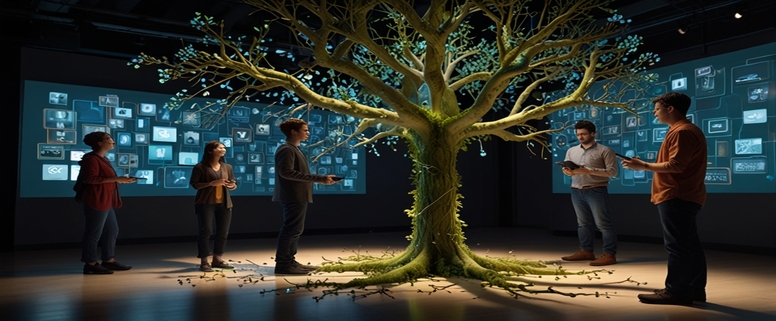
Most technology today has an empathy deficit. It treats humans as rational agents to be optimized, not emotional beings who need to be understood.
**Interfaces ignore emotional states.** They don't recognize when you're frustrated, overwhelmed, or hurt.
**Digital communication flattens connection.** We strip away body language, tone, context. Then we wonder why people misunderstand each other online.
**Context collapses.** A message meant for friends gets consumed by strangers. Platforms destroy the social context that makes communication meaningful.
**Metrics override meaning.** When you optimize for engagement, conversion, and retention, you optimize against the things humans actually need: meaningful connection, understanding, growth.
The results are predictable.
We're lonelier despite being more connected. More polarized despite having more information. More anxious despite having more convenience. Trust is eroding everywhere.
These outcomes are the harvest. We planted the wrong seeds.
What would it look like to plant different ones?
**Start with empathy, not code.** Before writing a single line, understand the lived experiences of the people who'll use what you build. Not market research. Genuine understanding.
**Measure what matters.** Relationship depth. Understanding gained. Agency supported. Well-being improved. Not just time-on-site and click-through rates.
**Respect context.** Design systems that understand the social and emotional situations they operate in. Adapt to support relationships, not disrupt them.
**Practice humility.** Build systems that know their limits. That defer to human judgment on complex values, emotional nuance, ethics.
**Make it transparent.** Show people how the system works. Give them real control over how technology integrates into their lives.
This applies across every domain.
Communication platforms should enrich connection, not thin it. Social technologies should build understanding across differences, not sort us into tribes. AI systems should partner with human flourishing, not replace human relationships. Information systems should help us develop nuanced understanding, not confirm our existing biases.

Here's something most tech companies get fundamentally wrong. They optimize for individual preferences. Personalization. Your feed. Your recommendations. Your experience.
But humans are social beings. Our flourishing depends on healthy relationships and communities. Not just personal satisfaction scores.
**Beyond personalization.** Systems obsessed with individual preferences undermine the shared experiences that hold communities together. We need technology that balances personal relevance with common ground.
**Relationships over individuals.** Design for the space between people, not just for isolated users. Optimize for relationship quality, mutual understanding, collective coordination.
**Build commons.** Shared digital resources governed by communities, not extracted from them. Infrastructure for connection without the extraction imperative.
**Collective intelligence.** Tools that help us think together better. Leveraging diverse perspectives. Mitigating cognitive biases. Solving problems no individual could solve alone.
Some of the most promising work happening right now? Collaborative decision platforms. Community knowledge systems. Public interest technology. Civic tools that make democracy more participatory.
These aren't building for individual convenience. They're building for collective capability.
The MathSage system I built is a small example. It's designed to support the connection between teachers and students, not replace it. Rich explanations in tutor mode. Appropriate boundaries in assessment contexts. The technology serves the relationship.
Because learning is relational. It's emotional. A student who feels seen and understood engages differently than one being fed content by a machine.
**Healthcare** is another space crying out for empathic design. Digital health platforms should incorporate patient emotion and experience alongside clinical metrics. AI diagnostics should enhance clinical relationships, not displace them. Telehealth should preserve the human elements of care.
**Social media** might be the biggest opportunity of all. Imagine platforms that prioritize depth over breadth. Algorithms that broaden perspective instead of confirming bias. Interfaces that create space for reflection before reaction.
These aren't fantasies. They're design choices. The technology exists. What's missing is the will to prioritize human connection over engagement metrics.
Building empathic technology requires more than engineering skill. It requires a cultural shift.
**Technological literacy** needs to go deeper than "how to code." We need people who understand how technology shapes human experience, relationships, and society.
**Values should be explicit** in tech education. Every design choice embeds values. Students should learn to recognize that instead of pretending technology is neutral.
**Interdisciplinary teams.** Technologists trained in humanities, social sciences, ethics. Not as an afterthought. As a foundation.
**Empowered users.** People who understand how systems work, how their data is used, how algorithms shape what they see. Informed choice requires informed users.
In my own work, I focus on helping both creators and users see technical choices as fundamentally human choices. Because they are. Every line of code reflects and reinforces particular values and relationships.
We harvest what we seed.
The technologies we build today aren't just tools. They're seeds that grow into the environments we and our children will inhabit.
This isn't just on technologists. Educators, policymakers, everyday users. Our choices and demands shape what gets built. It means asking different questions about what "successful" technology looks like. Moving beyond capability, efficiency, and profit to ask: does this help us connect? Understand each other? Flourish together?
If we seed fear and division, we keep harvesting hatred and conflict.
If we seed empathy and understanding, we can harvest something worth inheriting.
Each design choice is a seed planted in our shared future. Every one.
The future doesn't belong to technology. It belongs to the values we embed within it.
"We harvest what we seed. If we seed fear, we will harvest hatred, and this is the harvest currently visible in many corners of the technological landscape. The alternative—seeding empathy to harvest understanding, connection, and compassion—requires deliberate choices."