!The Journey of Transformation: Converting Struggles into Wisdom Cover
**Published:** March 16, 2025
There's something backwards about human experience. The things we'd do anything to avoid? Those are usually the things that teach us the most.
Not always. Let me be clear about that. Some pain just breaks you. Some experiences need healing before they need meaning. But when you have the right support, the right frameworks, the right people around you? Suffering can become a kind of raw material.
I know this because I've lived it.
Dyslexia and ADHD made school feel like a system designed to tell me I was broken. A cycling accident in 2016 put me in a coma and nearly ended everything. Walking away from a successful hospitality career to start over as a mature student in computing? That was its own kind of death and rebirth.
None of these things felt like gifts at the time. They felt like walls. But each one cracked something open in me that I didn't know was there.
This isn't about romanticising suffering. It's about acknowledging something real: we have an extraordinary capacity to turn the worst of our experiences into something that actually serves us. When the conditions are right.
When life breaks your assumptions, it creates openings. Your mental models about yourself and the world shatter, and in that space, new understanding becomes possible.
I've noticed a pattern in how this works:
**Your perspective expands.** Navigating difficulty forces you to consider possibilities you'd never have entertained otherwise. That flexibility doesn't go away when the crisis passes.
**Empathy deepens.** Your own suffering teaches you to recognise it in others. You start building bridges you couldn't have built before.
**You discover what you're made of.** Capabilities you never knew you had show up when comfort disappears.
**The superficial falls away.** Adversity strips things to the bone. What truly matters becomes obvious. What doesn't? You stop wasting energy on it.
Not all struggle leads here. Overwhelming experiences without support create trauma, not growth. Meaningless suffering creates helplessness. The transformative kind tends to include some element of choice, a challenge that stretches but doesn't break, and someone or something to help you make sense of it.
This shows up everywhere. Athletic training uses calculated stress to build capacity. Therapy works through difficulty to build resilience. Contemplative traditions face internal resistance to find insight. The common thread? Growth needs resistance. Wisdom comes from wrestling with reality, not hiding from it.
Let me get specific.
**Neurodivergent navigation.** School was not built for brains like mine. Text-heavy materials drained me. Attention fluctuations made consistency impossible. I spent years thinking these were deficits. They weren't. They were a different kind of operating system that nobody had bothered to accommodate.
**Physical trauma and recovery.** 2016. A vehicle hit me while cycling. Neck trauma. Coma. The physical recovery was hard, but the deeper impact was the discontinuity in my sense of self. When consciousness breaks and then returns, your relationship with reality fundamentally shifts.
**Career reinvention.** I left years of expertise in hospitality management to go back to education in computing and cybersecurity. I traded established success for being a beginner again. The practical challenges were real. The identity questions were harder.
These experiences share a trajectory: disruption, then integration, then expanded capability. The insights didn't come despite the struggle. They came because of it. Because navigating hard terrain forced me to integrate experiences that would otherwise have stayed separate.
But none of it happened automatically. Each journey required support, meaning-making frameworks, and practices for integration. The wisdom didn't emerge from the suffering itself. It emerged from working through it with awareness.
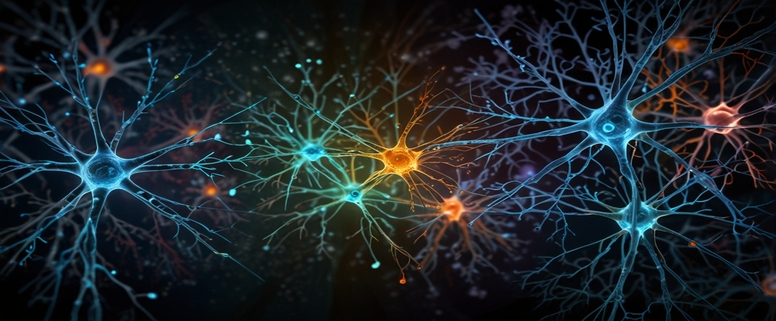
This isn't just philosophy. It's neurobiology.
**Neuroplasticity activates.** Moderate stress increases production of BDNF (Brain-Derived Neurotrophic Factor), which supports neural growth and new connections. Your brain literally reorganises itself.
**New networks form.** Successfully navigating adversity builds neural pathways you wouldn't have developed otherwise. These stick around long after the challenge passes.
**Your prefrontal cortex builds meaning.** It constructs narratives that transform isolated painful experiences into coherent wisdom you can access and apply across contexts.
**Your stress response calibrates.** Engaging with manageable challenges expands your window of tolerance. Future difficulties become more navigable.
**Body awareness increases.** Processing difficult experiences often heightens your sensitivity to internal states. This becomes a resource for self-regulation and decision-making.
Why does challenge sometimes lead to growth and sometimes to ongoing distress? A few factors make the difference:
Some degree of agency matters. Challenges where you have meaningful choice activate different neural pathways than experiences of total helplessness. Social support changes neurological outcomes dramatically. Time, space, and frameworks for processing determine whether experiences become integrated wisdom or fragmented trauma.
The brain isn't designed to avoid all challenge. It's designed to grow through appropriate difficulty. To convert struggle into expanded capability. When the conditions are right.
Here's the shift that changes everything: seeing pain as information rather than punishment.
Pain, whether physical or emotional, often contains data about our needs, boundaries, and relationship with reality. When we treat it purely as something to eliminate, we lose the signal.
Our automatic reaction to pain is avoidance. Sometimes that's appropriate. But often it prevents us from hearing what pain is actually telling us.
As I've written before: "Pain is not a punishment but a teacher. Suffering is not a life sentence but a temporary state of disconnection."
After my accident, physical pain initially seemed like just something to get rid of. But as I developed a different relationship with it, the pain started revealing information. Healing patterns. Activity thresholds. The connection between physical and emotional states. Similarly, the emotional distress of learning differently in standard education initially felt like proof I was inadequate. Eventually, it revealed something else entirely: the limitations of standardised approaches and the reality of diverse cognitive styles.
This shift requires specific capacities:
**Non-identification.** Experiencing "I am in pain" rather than "I am my pain."
**Curiosity.** Genuine interest in what the pain is telling you, rather than immediate rejection.
**Boundaries.** Knowing when pain offers growth potential and when it requires protection.
**Frameworks.** Conceptual structures that help suffering make sense within the larger picture.
None of this develops automatically. It takes practice. It often needs guidance. But it's learnable.
Transformation looks individual. It isn't. Not really.
My challenges with dyslexia and ADHD connected to something much bigger: educational systems optimised for one cognitive style at the expense of all others. The insights I gained navigating those challenges became useful not just for me but for developing approaches that serve diverse learners.
My recovery from physical trauma connected to larger questions about technology, human capability, and integrating physical and mental health. What started as personal healing influenced how I approach technology design.
This matters because sharing these journeys serves purposes beyond individual healing. It contributes to a growing body of shared understanding about how we navigate difficulty and what meaning we create from it.
The digital age gives us unprecedented tools for this kind of wisdom-sharing. But digital platforms often reward performative suffering and shallow transformation stories over authentic accounts of messy, complicated journeys. Building spaces for genuine wisdom transmission remains one of our important challenges.

Technology can help or hinder this process. Depends entirely on design and intention.
When done right, digital tools can support the journey in real ways. Journal platforms that structure reflection on challenging experiences. Timeline tools that reveal patterns in personal struggles. Narrative systems that help build meaning from fragmented difficulty. Biofeedback and neurofeedback for developing self-regulation. Mindfulness apps that build non-reactive awareness. AI coaching that provides personalised guidance through transitions.
The most promising technologies support embodiment of insights: habit formation tools that turn wisdom into consistent practice, creation tools that facilitate expression, platforms that convert hard-won understanding into teachable skills.
But the same tools that could support authentic transformation can enable escapism, quick-fix seeking, or commercialisation of suffering. Design matters. Intention matters. Building for genuine human flourishing rather than attention capture or profit generation? That's the difference.
In my own work, I focus on developing technologies that help transform neurodivergent challenges into unique capabilities. Tools that convert physical limitations into new perspectives. Systems that translate personal insights into shareable wisdom. This work keeps reinforcing my belief: technology can be a transformation catalyst. But only when built with real understanding of how humans actually develop.
True transformation isn't intellectual. Understanding something conceptually isn't the same as knowing it in your bones.
Integration operates across three dimensions:
**Cognitive.** Conceptual frameworks and meaning structures. **Emotional.** Appropriate feeling and response to challenging experiences. **Somatic.** New understanding embedded in physical patterns of living.
Each is necessary. None is sufficient alone. Cognitive insights without emotional processing stay abstract. Emotional processing without conceptual frameworks lacks structure. Both without somatic integration fail to change how you actually live.
Modern neuroscience confirms this through memory reconsolidation, polyvagal theory, and embodied cognition. Our most significant learnings are stored not just in thoughts but in emotional responses and bodily states. Multi-level processing is required for complete integration.
And integration doesn't follow a straight line. It spirals. Progress oscillates between phases. Understanding this helps set realistic expectations.
Common traps that block integration: premature closure (mistaking initial insight for complete transformation), compartmentalisation (keeping wisdom siloed), intellectual bypass (substituting concept-level understanding for the real thing), and identity resistance (rejecting insights that threaten your self-concept).
My own experience with integration after the accident and coma took years. Processing across cognitive, emotional, and physical dimensions before it became truly integrated wisdom. Transforming neurodivergent challenges into strengths wasn't just reframing. It was emotional processing of earlier experiences and developing entirely new patterns for learning and creating.
The most powerful technologies for supporting this are the ones that work with integration's messy, non-linear reality rather than promising quick transformations.
We are not defined by our struggles. We're defined by our capacity to transform them.
This isn't a straight path from pain to wisdom. It's complex, non-linear, and it requires support. It requires shifting how we relate to difficulty. From pain as punishment to pain as potential teacher. From challenges as limits to challenges as revelations.
Technology can support this journey when designed with awareness of how humans actually grow. Digital tools can develop awareness, guide us through hard passages, facilitate multi-dimensional integration, and enable sharing of hard-won wisdom. But those same tools can distract from authentic transformation when built for engagement metrics instead of genuine flourishing.
From hospitality management to neuroscience exploration. From struggling student to educational innovator. From accident victim to consciousness researcher. My journey keeps teaching me the same thing:
We are not defined by our past struggles but by our capacity to transform them into wisdom that serves our ongoing development and contributes to collective understanding.
This isn't about romanticising pain. Some experiences need healing first. Nobody should feel pressure to extract meaning from trauma before they're ready.
But we do have this remarkable capacity. To integrate even the hardest experiences into expanded understanding. When given the right support. The right frameworks. The right time.
"Pain is not a punishment but a teacher. Suffering is not a life sentence but a temporary state of disconnection."