!Evolution, Not Survival: Technology as a Path to Human Advancement Cover
**Published:** March 16, 2025
We are not here merely to survive. We are here to evolve.
Sit with that for a second.
For most of human history, survival ate everything. Food, shelter, safety, reproduction. That consumed nearly all our energy and creativity. Not by choice. By necessity.
Technology changed that. Agriculture gave us reliable food. Industry created material abundance. Medicine extended lifespans. Digital tools democratised information and connection. Each revolution freed more human consciousness from the immediate grip of staying alive.
And yet. Survival thinking still dominates. We build technologies to solve problems rather than expand possibilities. To increase efficiency rather than create meaning. To defend against threats rather than develop potential.
We've freed ourselves from survival's grip and then... kept acting like we haven't.
What if we approached technology differently? Not as a tool for ensuring existence, but as a catalyst for becoming something more? Not transcending our humanity through tech enhancement, but actually fulfilling the extraordinary potential already latent within us?
Survival thinking has a specific shape. It shows up as:
**Scarcity orientation.** Believing resources are fundamentally insufficient. Competing for limited pie instead of baking new ones.
**Threat vigilance.** Hyperawareness of danger. Attention locked on risk avoidance rather than opportunity exploration.
**Short-term focus.** Fixating on immediate outcomes. Ignoring long-term development.
**Binary thinking.** Reducing complexity to safe-versus-dangerous. Losing everything in between.
These patterns made sense when a bad decision meant death. Our ancestors needed these biases. But now they've become cognitive relics constraining potential rather than ensuring survival.
Watch how survival thinking shapes technology development. We justify tech primarily as problem-solving rather than capability-creating. We obsess over risk until we prevent exploration of transformative benefits. We optimise for efficiency at existing tasks rather than enabling genuinely new ones. We drive development through zero-sum competition rather than collective advancement.
Moving past this doesn't mean abandoning caution. It means developing a more balanced relationship with both opportunity and threat. Making space for evolutionary thinking alongside survival vigilance.
This matters more than ever. AI, biotech, and other advanced capabilities create unprecedented opportunities. Whether those opportunities lead to human flourishing or limitation depends largely on the mindset we bring to them.
Evolution here doesn't mean biological natural selection. It means conscious development of human capabilities, understanding, and ways of being.
**Consciousness expansion.** Awareness beyond immediate concerns. Broader contexts, perspectives, possibilities.
**Capability enhancement.** Developing creativity, empathy, wisdom, and other qualities that go beyond survival functions.
**Understanding deepening.** Moving from simplified models toward genuine comprehension of complex systems.
**Values refinement.** Evolving what we consider important beyond basic need satisfaction.
**Relationship transformation.** More conscious, compassionate relationships with humans, other species, and our environment.
None of this happens automatically when survival needs are met. History proves that. Material abundance alone leads just as easily to complacency, novel forms of conflict, or sophisticated distraction as it does to genuine evolution.
As automation handles more survival-oriented tasks, we face a real choice: find evolutionary purposes that transcend survival, or remain trapped in increasingly sophisticated but fundamentally limited survival patterns.
Think about work. Automation reduces survival-driven labour. We can either fight to preserve old patterns or reimagine human work around creativity, care, and wisdom.
Think about economics. Technology creates abundance. We can either maintain artificial scarcity or develop economics of flourishing.
Think about knowledge. Information systems expand access to everything. We can either drown in overload or develop wisdom systems that integrate knowledge into real understanding.
The point of reducing survival burdens through technology isn't creating comfort. It's freeing human capacity for higher-order development. But only if we consciously direct it there. Otherwise it dissipates into consumption and distraction.

When we approach technology from an evolutionary perspective rather than a survival one, its role changes completely.
It stops being about solving problems. It starts being about catalysing human advancement.
How? By removing constraints that prevent expression of latent capabilities. By providing better feedback that accelerates learning. By scaffolding that lets us reach beyond current abilities. By enriching environments that stimulate growth.
Look at what this means in practice:
**Information technologies** stop being about data access and start helping users develop actual wisdom. Contextualising information, revealing relationships, supporting meaning-making.
**Communication systems** stop being about efficient message transmission and start enhancing understanding across differences. Supporting authenticity. Fostering real connection.
**Educational technologies** stop being about content delivery and start adapting to individual developmental paths. Cultivating curiosity and creativity. Integrating knowledge into practical wisdom.
**Creation tools** stop being about productivity and start expanding expressive possibilities. Augmenting imagination. Supporting collaborative innovation.
These applications share a pattern: they don't replace human capabilities. They create conditions where more of those capabilities can develop and find expression.
AI might be the most significant evolutionary catalyst we've created. It could also be the most significant limitation. Depends on how we approach it.
The dominant narrative is replacement. Which jobs will AI take? Which decisions will algorithms make? Which creative tasks will machines perform?
That's survival thinking. Viewing technology in competitive terms.
What if we asked different questions? How might AI help develop capabilities that currently lie dormant in us? What aspects of human potential might flourish when freed from tasks that don't require uniquely human qualities?
The most promising approach isn't artificial intelligence replacing human intelligence. It's complementary intelligences working together.
AI excels at pattern recognition across vast datasets. We excel at contextual meaning-making. AI manages complexity through computation. We navigate it through intuition and wisdom. AI maintains consistent focus. We bring creativity and purpose. AI processes without emotional bias. We contribute empathy and values.
When designed for complementarity rather than replacement, AI systems help us transcend cognitive limitations while preserving what's essentially human.
**Insight amplification.** AI identifies patterns beyond individual perception. We make meaning from them.
**Creative collaboration.** AI generates variations based on human creative intent. We explore possibilities that would otherwise remain hidden.
**Wisdom development.** AI contextualises information and reveals diverse perspectives. We integrate it into coherent understanding.
**Collective intelligence.** AI improves collaboration and bridges viewpoints. We set values and direction.
The project I'm working on, building an AI version of myself, is about augmenting myself and improving all my skills. I'm certain that my abilities and understanding of the world will greatly improve, helping me work towards improving this world and turning it into the place I envision for my kids.
AI's role isn't replacing humanity. It's catalysing our continued evolution. Helping us become more fully human, not less.
Perhaps the biggest evolutionary potential of technology isn't individual enhancement. It's amplifying our capacity to think, create, and solve problems together at scales that have never been possible.
Humanity's most significant achievements haven't come from isolated genius. They've come from collective knowledge development and collaborative problem-solving. Technology creates unprecedented possibilities for enhancing these collective capabilities.
**Knowledge integration systems** connect insights across disciplines that traditionally stay siloed.
**Collaboration environments** improve group thinking by coordinating contributions and synthesising viewpoints.
**Distributed cognition tools** spread cognitive tasks across networks of humans and machines based on complementary strengths.
**Perspective bridging technologies** help different viewpoints find common ground and integrate diverse insights.
**Collective memory systems** preserve insights and lessons that societies would otherwise forget and repeat.
The most significant challenges we face, climate change, technological ethics, governance of powerful new capabilities, require collective intelligence beyond what traditional approaches can mobilise.
The most promising frontier combines human and artificial intelligence in balanced systems. Human values and purpose setting combined with AI implementation. Human ethical judgment combined with AI analytical processing. Human creativity combined with AI pattern recognition. Human empathy combined with AI data processing.
These balanced systems don't subordinate humans to algorithms or limit AI to narrow tasks. They create new forms of intelligence that exceed what either achieves alone.
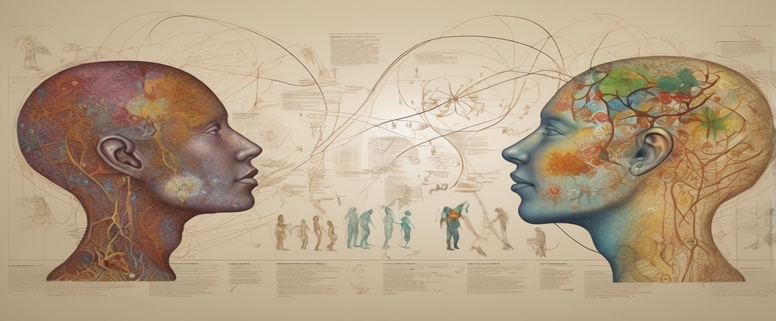
Shifting from survival-oriented to evolution-oriented technology requires new ethical thinking.
Traditional tech ethics focuses mainly on preventing harm. Minimum standards. Don't break things. That's necessary. But it's not enough.
We need to also ask: does this technology expand human potential?
**Capability ethics.** How does this technology affect development of human capabilities, physical, cognitive, emotional, social? Does it expand potential or contract it?
**Agency enhancement.** Does this technology increase our capacity for meaningful choice? Or does it replace human choice and capability?
**Wisdom cultivation.** Does this help humans integrate knowledge into understanding that guides action?
**Relationship quality.** Does this support deeper understanding, empathy, and authentic connection between people?
These questions don't replace harm prevention. They build on it. They add developmental dimensions that matter enormously when the technologies in question shape how humanity develops.
In practice, this means value-sensitive design throughout the process rather than ethics bolted on after the fact. It means including developmental psychologists, wisdom traditions, and evolutionary thinkers alongside engineers. It means evaluating systemic effects across multiple dimensions of human experience. It means thinking in longer time horizons.
This shift needs to happen at every level.
**Individual.** Reorienting purpose from acquiring and securing toward developing and becoming. Seeing technology not just as problem-solving or entertainment but as a tool for human development. Extending consideration beyond immediate outcomes to longer trajectories and intergenerational impacts.
**Organisational.** Expanding purpose beyond profit or problem-solving to include developmental impact. Tracking metrics related to human capability enhancement. Incorporating evolutionary considerations throughout development processes.
**Societal.** Transforming education toward personalised development of capabilities, creativity, and wisdom. Evolving economics to recognise contributions to human development. Developing governance with longer time horizons.
These shifts feed each other. Individual consciousness informs organisational choices. Organisational innovation influences societal systems. Evolving systems create contexts for further individual development.

We are not here merely to survive. We are here to evolve.
This changes everything about technology's purpose. From ensuring existence to enabling becoming. From helping humans stay alive to helping humanity express its extraordinary potential.
The shift doesn't deny basic needs. It recognises that beyond those needs lies vast territory we've barely begun to explore. Technology's deepest purpose might be creating conditions where human consciousness, creativity, compassion, and wisdom develop beyond the constraints survival thinking imposes.
The future belongs not to technology itself but to the human potential it might help unleash.
AI won't destroy us. We destroy ourselves. We have the opportunity to change. The atom didn't decide to become a bomb. The internet didn't weaponise itself. We do these things to ourselves. We create and discover tools that we immediately exploit for malicious purposes. Our brains are flawed, influenced by the food we eat, the content we consume, our actions, and the people we associate with.
So let's focus on the positive aspects. Acknowledge the negative. Find ways to address them. Instead of dwelling on fear, build on possibility. Most fear is triggered by a lack of knowledge anyway.
We are not here merely to survive. We are here to evolve. And that evolution happens first and most fundamentally within.
"We are not here merely to survive; we are here to evolve. This perspective fundamentally transforms technology's purpose from ensuring existence to enabling becoming."