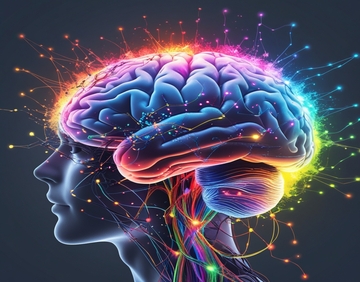
!Breaking the Barriers of Numbness: Reclaiming Our Neural Potential Cover
*Published: March 25, 2025*
We live in an age of infinite information and extraordinary technology. And somehow, we're getting dumber.
Not literally. But something is happening. A cognitive sluggishness. A numbing. Our brains are designed to solve puzzles, spot patterns, make connections, and generate insights. We've replaced all of that with scrolling.
We swapped challenging cognitive work for passive consumption. And we didn't even notice.
This didn't happen by accident.
**Passive consumption.** Algorithmically curated feeds create an illusion of learning while demanding zero cognitive effort. No resistance. No deep processing. No neural growth. Just the comfortable numbness of infinite scroll.
**Fractured attention.** Notifications. Alerts. Multitasking. Every interruption fragments focus and reduces the cognitive resources available for complex thought. Do this long enough and shallow attention becomes neurologically hardwired.
**Terrible nutrition.** Processed food high in refined carbs and inflammatory compounds directly impacts neural health. Omega-3 deficiencies. Missing micronutrients. The gut-brain connection means your diet is literally shaping your ability to think.
**The Google illusion.** We mistake access to information for actual knowledge. The ability to search for any fact in seconds creates a false sense of understanding that kills the deeper processing required to genuinely know something.
Beyond the specifics, the whole system pushes against cognitive engagement. Education rewards conformity over curiosity. The economy rewards consumption over creation. Social structures prioritise status over substance.
I see this in myself. The instinct to grab my phone during moments of boredom instead of letting my mind wander. The increasing difficulty of reading challenging material for extended periods. The pull toward pre-digested content over primary sources.
These patterns don't just stay as habits. They get encoded into neural architecture. Self-reinforcing loops of cognitive disengagement.
And the consequences go beyond individual brains. Climate change, AI ethics, social polarisation -- these problems require exactly the kind of sustained, deep thinking that our numbed systems can't maintain.
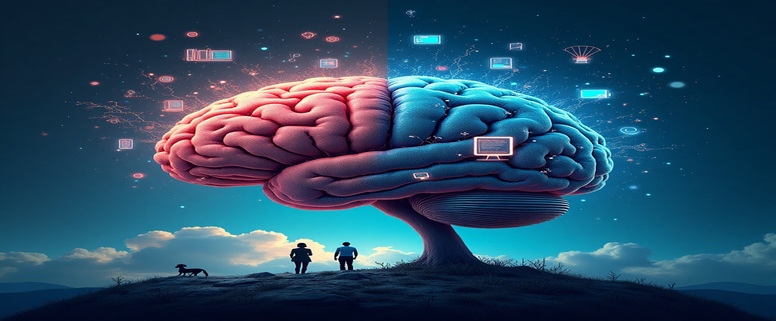
Technology is both the problem and the answer. You can't understand one without the other.
**How it numbs us:** - Apps engineered to capture attention through variable reward mechanisms - Cognitive offloading -- storing everything in devices instead of our brains - Interfaces that encourage watching over creating - Filter bubbles that shield us from challenging perspectives - Digital environments built for skimming, not thinking
**How it could save us:** - Personalised AI that adapts to individual cognitive styles - Targeted cognitive enhancement exercises - Tools that connect scattered information into coherent knowledge - Technologies creating optimal conditions for focused work - Neurofeedback systems that optimise cognitive function in real time
As someone with dyslexia and ADHD, I've lived both sides. The numbing pull of passive digital consumption. And the extraordinary cognitive enhancement that thoughtfully designed technology provides.
The technology itself is neutral. The same phone that delivers endless short-form content can give you access to the most profound learning experiences ever created. Design and intention determine everything.
The question isn't whether to use technology. It's how to design and use it so it amplifies human cognition instead of replacing it.
86 billion neurons. 100 trillion connections. The most complex system known in the universe. Capable of self-awareness, abstract reasoning, emotional depth, and creative thought.
And most of us use a fraction of it.
**Pattern recognition.** Your brain identifies complex patterns across domains with remarkable efficiency and minimal examples. Making sense of ambiguous, incomplete information in ways AI still can't match.
**Adaptive learning.** Neural systems continuously reorganise based on experience. Neuroplasticity means your brain is always optimising, always adapting. Even recovering from injury through reorganisation.
**Creative synthesis.** Combining unrelated elements into novel concepts. The foundation of everything innovative. Connecting previously isolated ideas across different knowledge domains.
Here's the hard truth. Unused neural potential doesn't stay neutral. It atrophies. Neuroplasticity cuts both ways. Connections you use get stronger. Connections you ignore die. Your brain optimises based on what you actually do. Systematic numbing literally reshapes your neural architecture for lower functioning.
But the flip side? The same neuroplasticity means you can rebuild. Through appropriate stimulation and practice, you can reverse the damage.
> Our brains are extraordinary machines designed to solve puzzles, to learn, to explore. Yet we've systematically numbed their potential. We've replaced curiosity with comfort and knowledge with entertainment.

Here's what actually works.
**Cognitive strategies:** - **Deep reading** -- engage with challenging texts that demand sustained attention - **Productive struggle** -- embrace difficult cognitive tasks that push past your current limits - **Question-driven learning** -- explore through curiosity, not passive absorption - **Multi-modal learning** -- use different sensory channels to strengthen diverse neural pathways - **Active processing** -- convert consumption into creation through notes, teaching, and application
**Environmental changes:** - Restructure your digital tools to help rather than hurt - Protect deep work periods from interruption - Optimise nutrition for brain function - Prioritise sleep quality for memory consolidation - Move your body regularly to boost blood flow and neural growth factors
From my own experience as a neurodivergent thinker, I've found specific approaches that leverage different cognitive styles:
**Pattern-based learning.** Forget memorising isolated facts. Find the underlying patterns and relationships. When I study a new field, I create visual maps of core concepts instead of linear notes. This is how brains actually work.
**Cognitive cycling.** Alternate between mental activity types based on natural attention rhythms rather than forcing hours of sustained focus on one thing. I cycle between analytical work, creative tasks, and physical movement throughout the day.
**Interest-driven depth.** Follow genuine curiosity deep rather than skimming broad. When something genuinely grabs me, I go deep. Intrinsic motivation sustains the cognitive effort that builds neural capacity.
**Externalised cognition.** Use diagrams, notes, and digital systems to extend working memory. My system combines visual note-taking, digital knowledge management, and physical concept manipulation.
**Multisensory encoding.** Engage multiple senses simultaneously for stronger neural pathways. When learning complex material, I combine visual diagrams, verbal explanations (often recording myself), and physical movement.
This one surprises people.
Conventional wisdom says slow down to think better. I've found the opposite.
**Driving.** At higher speeds (within safe limits), my focus sharpens. Awareness extends to the farthest visible point while maintaining complete peripheral attention. Speed seems to bypass the numbing filters that normally constrain perception.
**Thinking.** When processing information rapidly, making connections at high speed, comprehension and insight improve. Rapid thinking generates momentum that carries past the resistance of habitual thought patterns.
**Physical-mental feedback.** Fast movement activates neural systems that enhance cognitive performance. The body and brain amplify each other.
The relationship between speed and awareness isn't a straight line. It's a U-curve.
**Low speed:** awareness drops. The brain gets bored. Distraction, mind-wandering, disengagement take over. Not enough stimulation for optimal arousal.
**Optimal speed:** awareness and cognitive function peak. The brain enters enhanced engagement. Processing becomes more efficient and focused. This zone is usually much faster than most people habitually operate.
**Overwhelm zone:** too fast. But these thresholds are higher than most people assume, and they expand with practice.
Most people operate cognitively at speeds far below their capacity. Another form of numbness. Habitual slowness constraining potential.
Deliberately increasing processing speed -- timed exercises, rapid problem-solving, speed reading -- can enhance cognitive function. Physical speed through sprints, fast-paced sports, or even quick walking boosts mental performance too.
Balance this with deliberate stillness. The goal isn't constant overdrive. It's accessing different cognitive velocities as needed. Intense focus when it's time. Open reflection when it's time.
We're at a crossroads.
The same technologies and systems that numbed us can reawaken us. But only if we choose differently. And we make that choice every day. In our habits. In what we consume. In how we design tools. In what we teach.
The stakes go beyond personal improvement. Climate change. AI ethics. Social fractures. These demand exactly the sustained, complex thinking that numbness destroys. Our cognitive capacity isn't just a personal asset. It's a collective resource humanity needs.
Breaking numbness starts with recognition. See the patterns. Notice the phone grab. Notice the shallow reading. Notice the preference for pre-digested content. Then deliberately counter them.
Reimagine your relationship with technology. Redesign your environment. Follow your curiosity where it leads. Find your optimal speed.
Our brains are extraordinary. 86 billion neurons, 100 trillion connections, designed to solve, learn, explore, and create. We just have to stop numbing them and start using them.
We harvest what we seed. Plant better inputs, grow better minds.