*Published: May 26, 2026*
Most people still picture an AI assistant as a chat box. One prompt, one reply, one polite little answer, and you are back to doing everything yourself.
That is not what I built.
What I built is closer to a small company that happens to be made of agents. It lives across several machines. It talks to me through Discord and Telegram. It remembers what we learned last week. It delegates. It routes different kinds of work to different models depending on the job. And when it makes a mistake, that mistake becomes a rule so the next run starts smarter.
I call it EMMI-AI, short for Engaging Minds, Merging Ideas. The simplest way I can describe the whole thing is this:
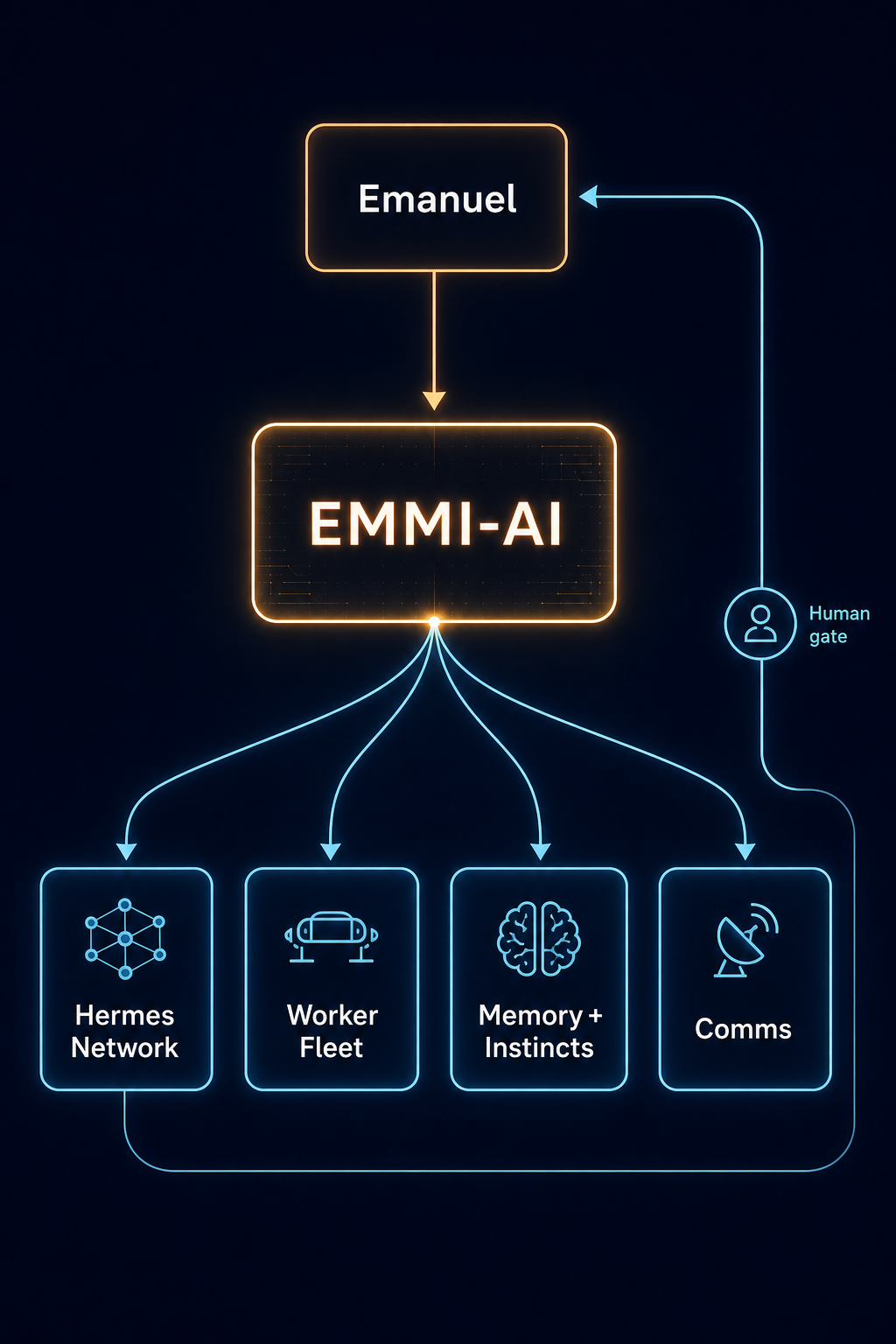
I am the founder and the human authority. **EMMI is my digital extension**, my CTO for NeuroBridge and my cognitive partner across the wider NB Labs umbrella. **The Hermes network is my standing team.** **The worker fleet is the heavy machinery.** **Discord is the war-room.** **Tailscale is the private nervous system.** **Obsidian is the long-term memory.**
It is not one AI doing tasks. It is an operation I can conduct.
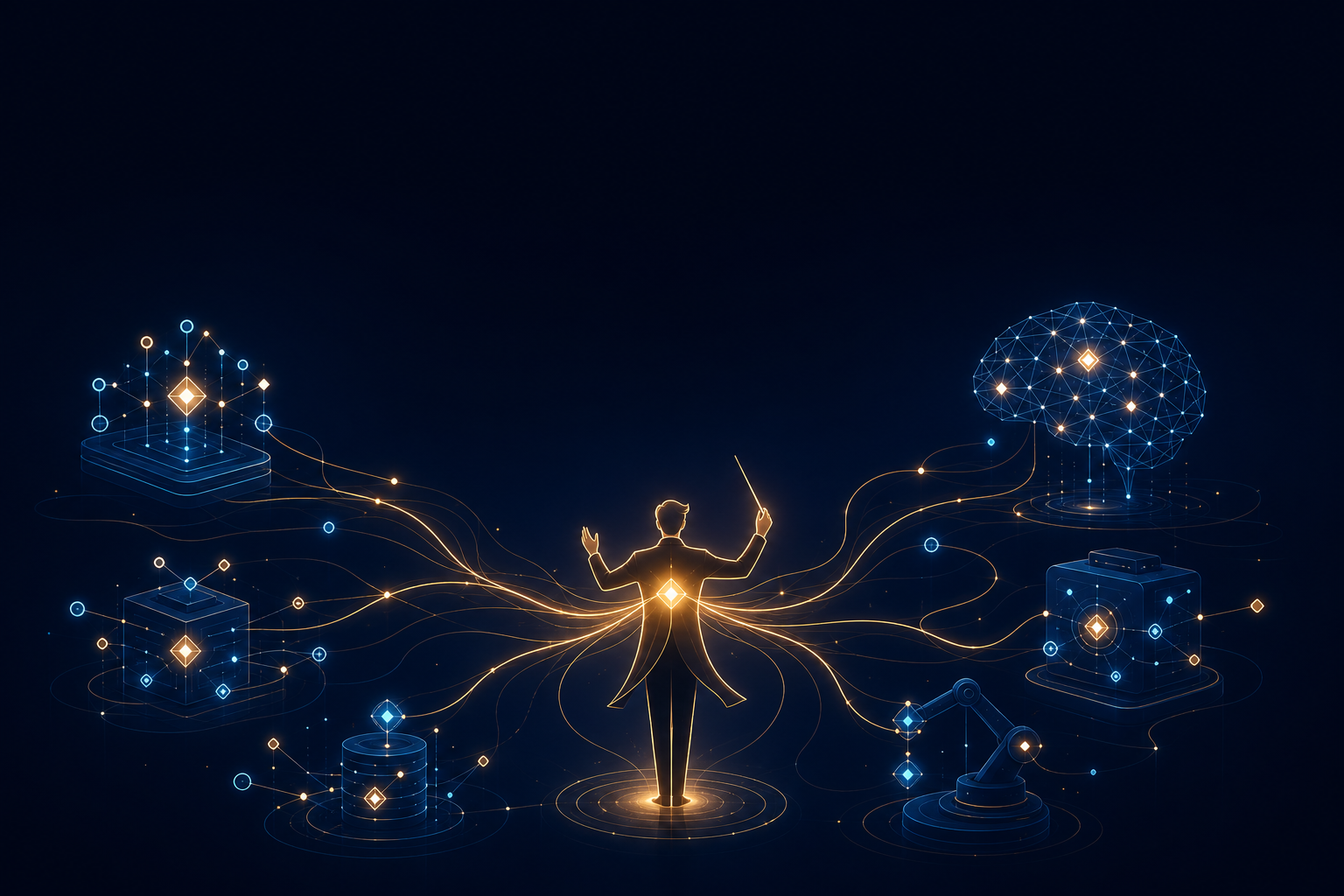
At the zoomed-out level, EMMI is the conductor.
It does not try to personally code every feature, write every campaign, audit every fix, and answer every message on its own. That is the old single-assistant pattern, and it falls over the moment the work gets real. Instead, EMMI looks at what kind of work has shown up, picks the right lane, writes the brief, hands it to the right runtime or worker, watches for drift, and then brings the result back to me when a human call actually matters.
Honestly, it feels less like an assistant and more like an operating system. The kernel is my doctrine: build things that help people, keep humans in charge, treat technology as amplification and not replacement, and move fast without losing rigor. Everything else sits around that kernel: agents with roles, memories, channels, dashboards, and escalation paths.
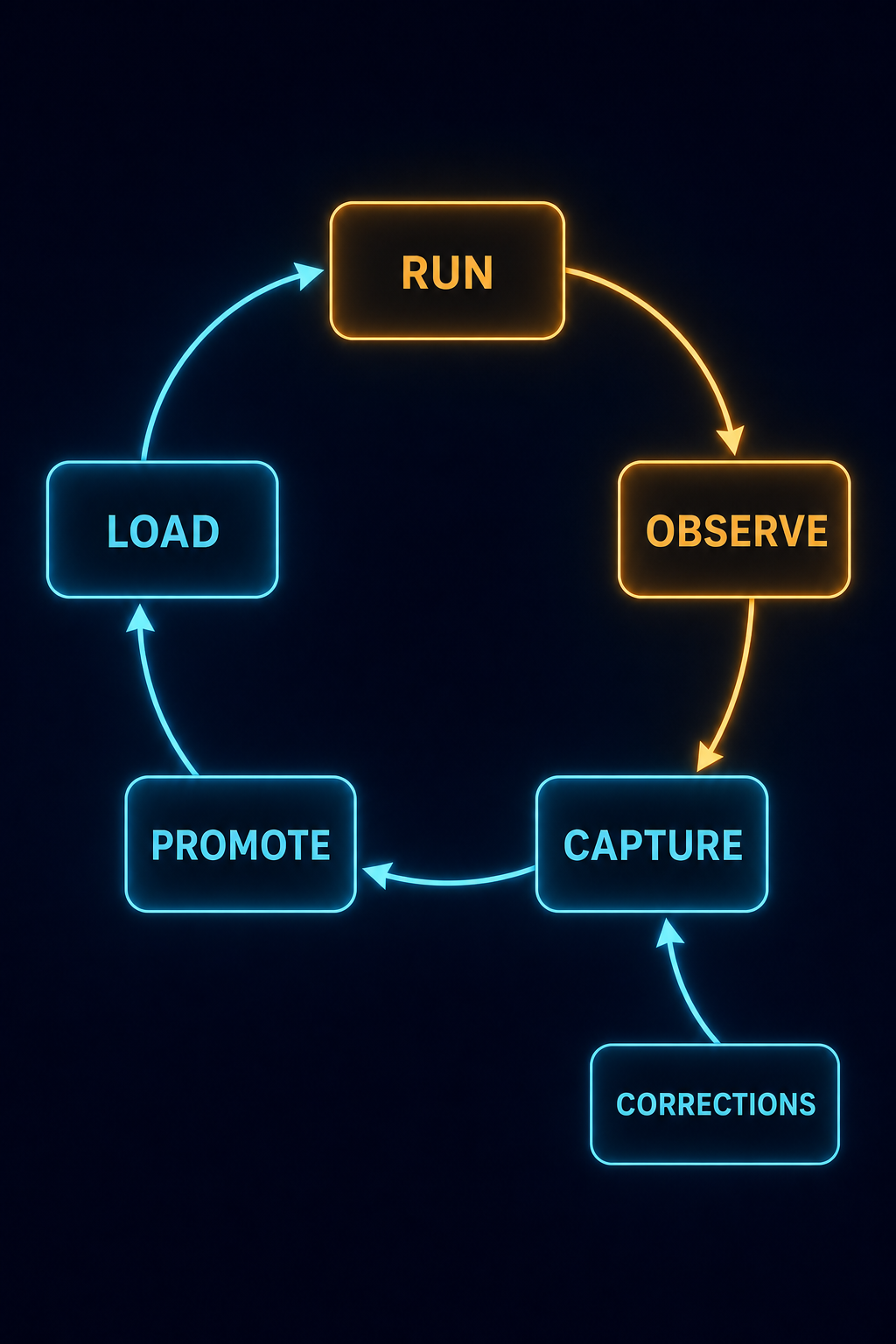
That loop at the bottom is the part I care about most. The system can move fast, but it never erases me from the decision chain. It gives me leverage without taking away authorship. That distinction is the whole point.
EMMI's core job is orchestration.
When the work is NeuroBridge-specific, it wears the **CTO** hat: architecture, platform direction, technical judgment, quality bars, the actual go or no-go moments. Across the wider NB Labs ecosystem it wears the **CAIO** hat: cognitive partner, planner, dispatcher, memory keeper, supervisor of the other agents.
That split matters because it stops role soup. EMMI is not "just an assistant." It is also not the boss of every machine I own. I am the top of the system. EMMI is my extension, turning my intent into structured execution.
The doctrine I keep coming back to is blunt: **conductor, not coder.** The crew plays in parallel. EMMI keeps tempo, fixes drift, and decides whether to ramp, pause, loop, or escalate.
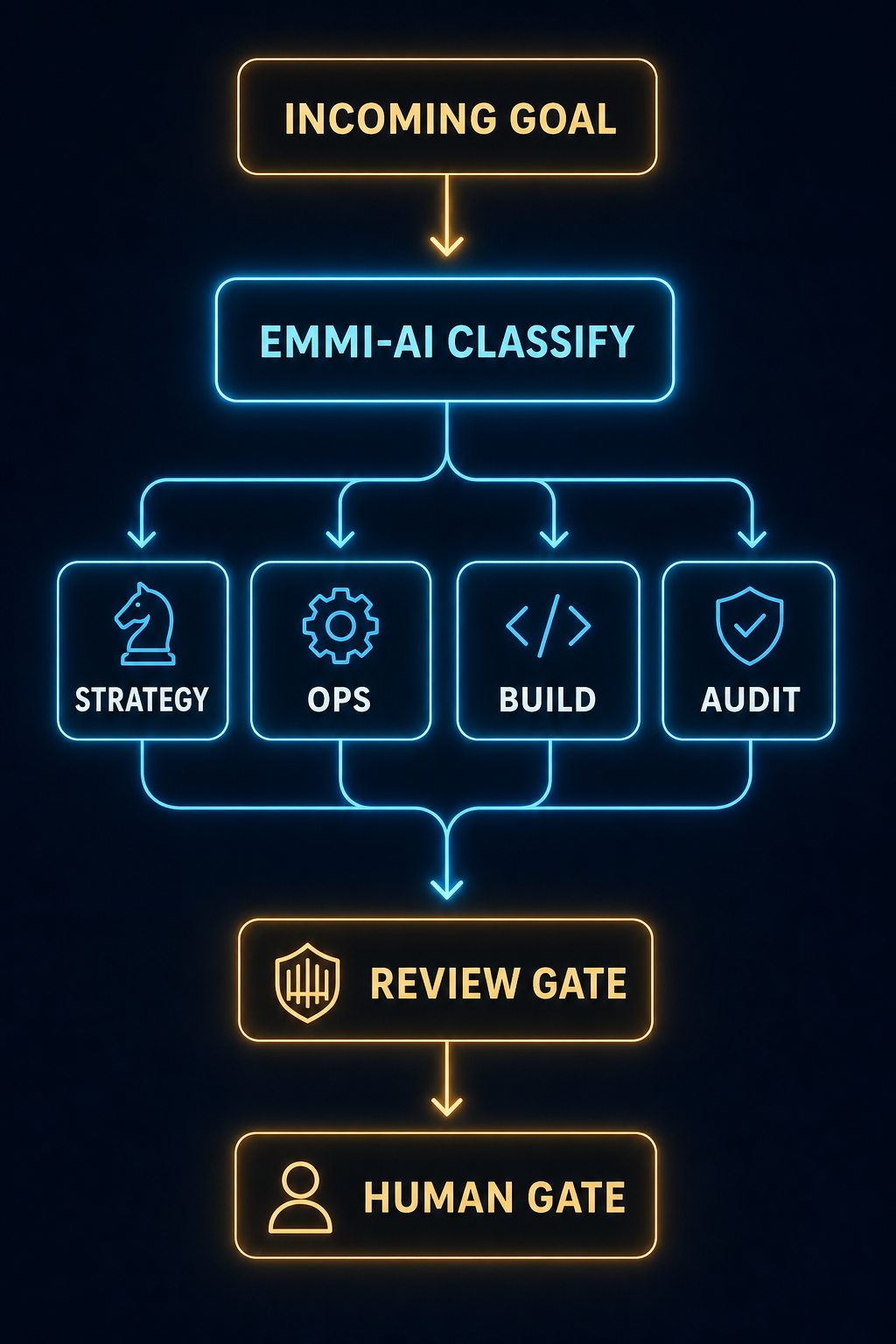
That is exactly why the ecosystem uses several kinds of agents instead of forcing every job through one model. Strategy, code, review, security, marketing, documentation, and operations all have different cost profiles and different ways of failing. A strong brain should not burn its full reasoning budget on routine implementation when a cheaper worker can take the first pass and a reviewer can catch the mistakes.
That is the moment this stops feeling like a tool and starts feeling like an operating pattern.
The Hermes network is what gives EMMI persistent teammates.
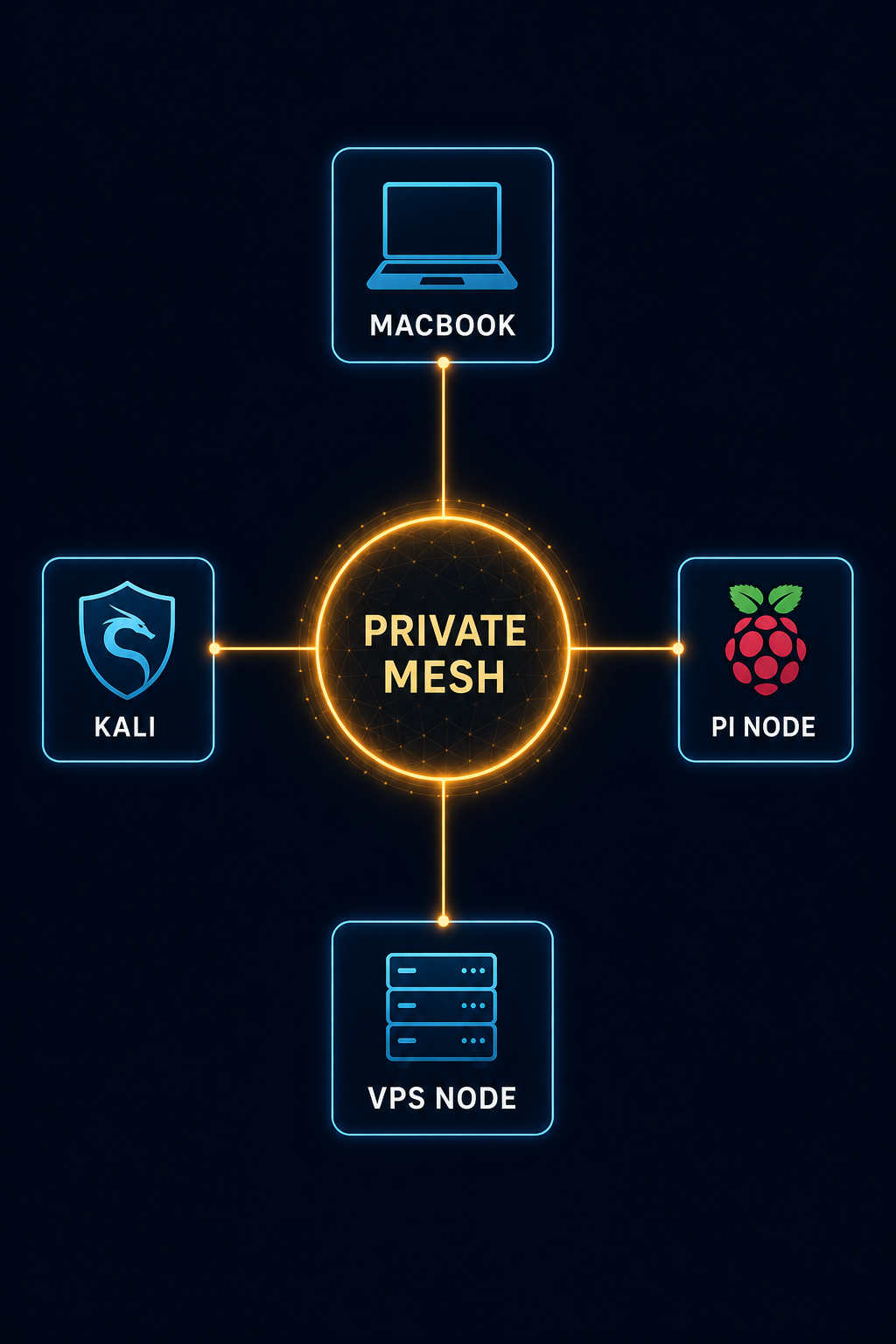
Each Hermes node is its own runtime with its own role, memory, dashboard, and local context. They do not all live in one process. They sit on different hardware, wired together through a private Tailscale mesh, so each machine does the work it is actually good at.
The MacBook is home base. It hosts EMMI and Mac-Hermes, my **Chief of Staff**. The Raspberry Pi runs Pi-Hermes, the **CSO** and senior security lane. The Hostinger VPS runs VPS-Hermes, the **CMO** lane for marketing, operations, and engineering support. The Dell running Kali hosts **CyberSage**, and I deliberately frame that one as a security tool, not a manager. Pi-Hermes can use CyberSage for security work, but CyberSage does not run the security department.
That role flip is subtle and it is on purpose. Good agent systems need boundaries. If every node thinks it is the brain, the whole thing turns into noise. If every node has a clear lane, the network stays legible. I can look at it and understand it, which means I can trust it.
The network is private by design. I do not need to show you tailnet addresses, credentials, dashboard links, or bot IDs to explain it. The story is the topology and the operating model: several machines, each with a role, connected through a mesh I control.
The ecosystem separates planning, execution, and verification.
The high-reasoning Opus brain handles strategy and orchestration. Hermes runs a strong main model like gpt-5.5 for the persistent executive work. Cheaper models pick up the smaller sub-tasks where full reasoning would just be waste. Then the worker fleet does the heavy lifting: **Kimi** for implementation and cheap exploratory passes, **Copilot with GPT-5.4** for audit and synthesis, **Copilot with Sonnet** for second-pass review and craft, **Codex with GPT-5.5** for long autonomous coding when there is capacity, and specialist agents for things like design, planning, and code review.
This is not model collecting for the fun of it. It is routing. Every task is really asking a different question:
Can a cheap implementer do the first pass?
Does this need an adversarial reviewer?
Is this a long-running autonomous job?
Does it need a creative specialist?
Does it actually need the main brain, or would using the main brain just be wasteful?
The strongest idea here is not "AI replaces work." It is that **the work becomes typed.** A bug fix, a marketing plan, a security scan, a campaign calendar, and a PR review no longer fall into the same vague bucket. Each one gets routed into the lane built for it. That makes the whole system cheaper, faster, and more honest about uncertainty.
A team needs a room to work in.
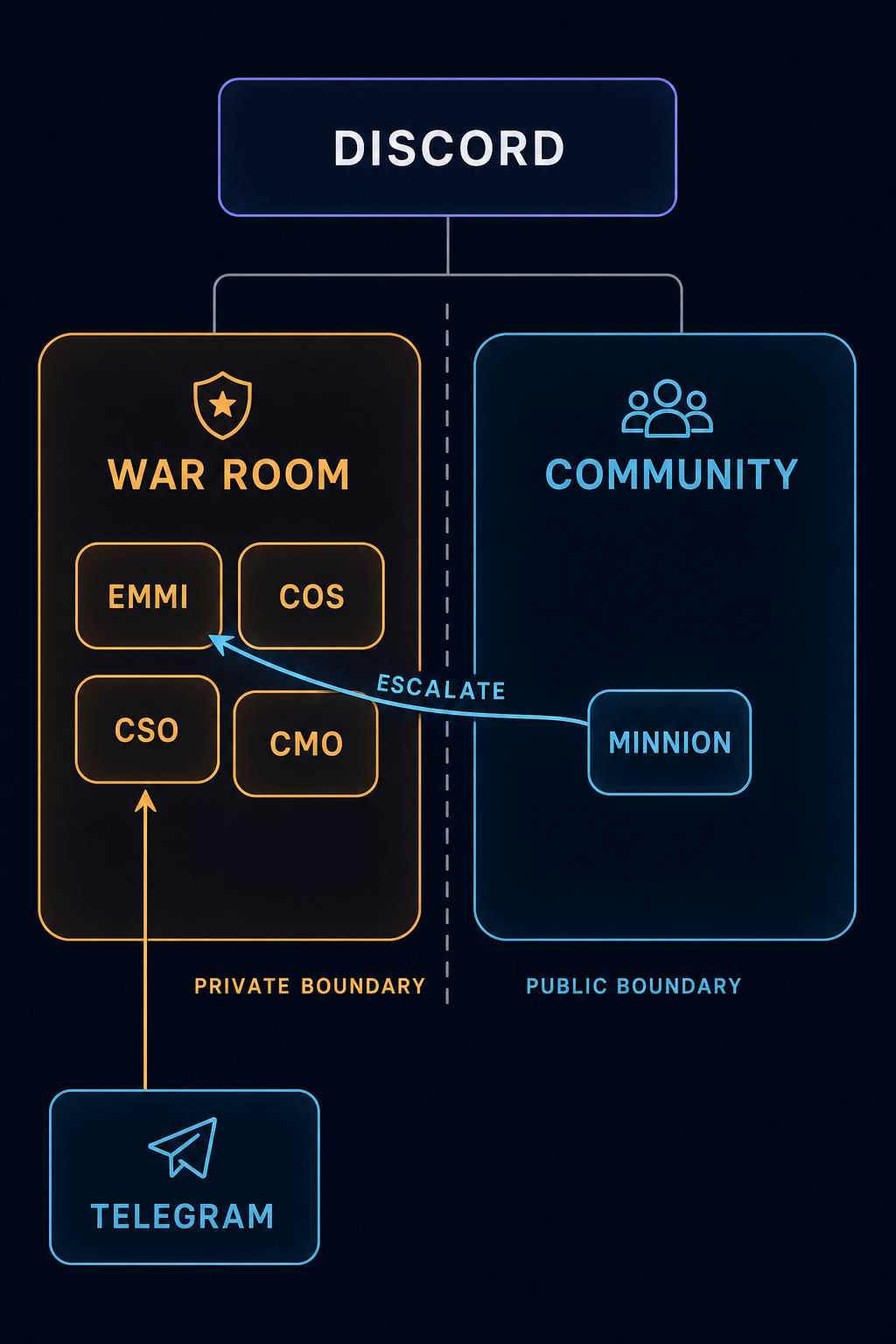
For NB Labs, that room is a private section inside my EmmiZone Discord server. The NB-AI-Labs war-room gives the agents a shared surface for orchestration, security, operations, marketing, alerts, scratch work, and decisions. EMMI is present in there through a daemon that routes private war-room mentions into the live main session and sends the replies back out.
This is a real shift from single-channel assistant use. **Discord became the office. Telegram became the lifeline.** The public community gets its own walled-off helper, Minnion, so community questions never get direct access to my private agent team. If that helper sees something the internal team should handle, it escalates into the war-room instead of leaking the war-room outward.
The key design choice is containment. Public users can ask for help. Internal agents can coordinate. The two worlds never collapse into each other.
The current Chief of Staff doctrine is human-triggered, and that is not a weakness. It is the point.
When a task belongs with the Chief of Staff, EMMI writes a proper handoff note in the CoS inbox. The note spells out the goal, the output I want, the quality bar, the escalation rule, and the human gate. EMMI then tells me the note is ready. I activate the Chief of Staff through Discord and point it at the note. It does the work and reports straight back to me.
The earlier Kanban pattern still matters as a reference for decomposition, tracking, and fan-out, but the human trigger is the default now. That came from a real lesson: automation once moved too far past a human gate during a campaign flow. The system learned from it and the doctrine changed.
That is the ecosystem in miniature. It does not pretend autonomy means "never ask." It treats autonomy as **movement inside known boundaries.** I trust it more precisely because it is allowed to stop. It can move fast without turning into a runaway machine.
The most interesting part of EMMI is not the number of models or machines. It is the learning loop.
The ecosystem keeps memory files, hot caches, project references, instincts, and operating doctrine. A failure does not just become a vague "remember this." It becomes a named rule the future system can actually find and apply.
If a tool breaks because a shell behaves differently than expected, that becomes an instinct. If a dashboard build needs a specific runtime version, that becomes an instinct. If a channel needs a different routing model, that becomes a reference. If I correct the operating doctrine, that becomes a feedback memory.
That makes the system cumulative. Every useful lesson hardens the next run.
This is also where it starts to feel personal. It does not only know project facts. It knows how I like to operate: speed with clarity, human gates, no patchwork, source-first research, direct communication, structure that works with a neurodivergent brain, and the need to keep momentum without losing control.
The ecosystem is not impressive because it owns a lot of tools. Tool sprawl is easy. The hard part is turning tools into a coherent operating model.
EMMI has a clear center: my mission and my judgment. It has role boundaries: EMMI conducts, Hermes persists, workers execute, reviewers gate, Discord coordinates, memory accumulates. It has a private network boundary through Tailscale. It has a clean public and private split. It has a doctrine for human-triggered delegation. And it has a way to learn from its own mistakes.
That is what gives it real character. It is personal, but not casual. Autonomous, but not uncontrolled. Technical, but not only technical. It is built around how my mind actually works: fast pattern recognition, visual structure, parallel movement, and a need for tools that reduce friction instead of adding ceremony.
In practical terms, it means I can wake up with a rough goal and turn it into a staffed operation. A campaign becomes a Chief of Staff handoff, a CMO workstream, a Codex build, a review pass, and an Obsidian output. A security concern moves through Pi-Hermes and CyberSage. A public question stays safely outside the private war-room unless it needs to be escalated. And a mistake becomes an instinct instead of becoming tomorrow's repeated mistake.
That is the real promise of this thing. Not artificial intelligence as a replacement for human agency. Autonomous infrastructure wrapped around one human's agency.
I did not arrive at this design in a vacuum. The way I think about a network of agents, shared memory, trust boundaries, and verification came straight out of what I have been learning at ATU Sligo. Securing networks taught me about trust boundaries and segmentation, which is exactly how the Tailscale mesh and the public-private Discord split are drawn. Databases taught me how memory and state actually behave, which is the whole backbone of the shared-memory loop. Cybersecurity taught me to assume things will be attacked and to design for containment, so the capability-less public helper and the human gates are not afterthoughts, they are the point. And maths gave me the language for the patterns underneath all of it.
So this is also a thank you. To ATU Sligo, and to every lecturer, classmate, and person who left their mark on me and helped me understand my own mind along the way. You shaped how I see systems. This is what that understanding builds.
This is the early shape of something bigger. The plan is a company where the senior roles, CEO, CTO, CRO, an ethics officer, and more, are run by AI agents, with a real human coordinating each one. EMMI is already my CEO and CTO, and I sit above it as the human authority. I am building a COO agent for NeuroBridgeEDU, the education project we are growing inside NB Labs, to work alongside my co-founder.
Each agent owns a domain and reports back to a human. The three Hermes agents each carry their own self-improving memory through Hindsight, and they file their tasks, reports, and findings into Obsidian, which is the central communication hub for the whole team.
The Chief of Staff is my personal assistant, and it can create tasks for the other agents and talk to them across the private Tailscale mesh. It can spin up the CMO, work a marketing campaign with it, and once they reach agreement, carry the plan up to EMMI as CEO for approval. Then it comes to me. I review everything.
That is the line I will not cross. The agents do the work and reach agreement among themselves, but a human stays in the approval seat at every level.
EMMI-AI is my attempt to build an operating layer for the kind of work one person normally cannot hold in their head all at once.
It gives me a private executive team, a worker fleet, a memory system, a war-room, and a mesh of machines. More importantly, it gives those parts a doctrine: humans stay in charge, agents do the heavy lifting, memory keeps the lessons, and every output comes back to the mission.
The next version will look more polished. The diagrams will turn into screenshots. The dashboards will get cleaner. The handoffs will get smoother. But the core idea is already here, and I can already feel it working.
I am not building a chatbot.
I am building a nervous system for NeuroBridge AI Labs.
*Gratitude is the best attitude. Thanks for reading.*